

How to Optimize for AI Search Engines
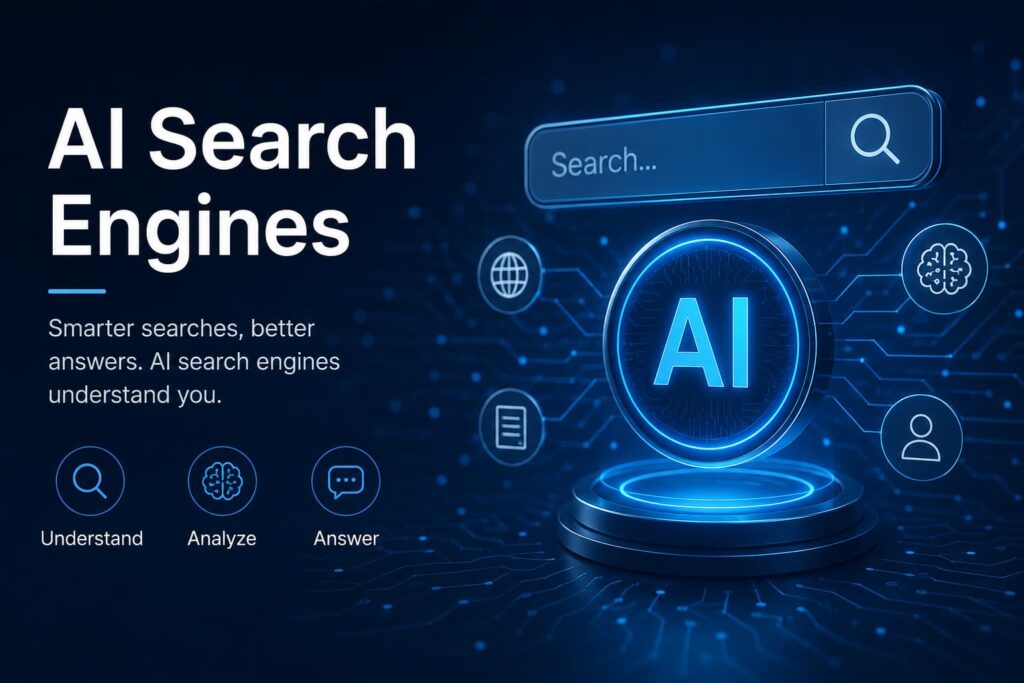
Artificial intelligence is transforming how people discover information online. Instead of relying only on traditional search results, AI search engines now generate direct answers by analyzing trustworthy, well-structured content. To stay visible in 2026 and beyond, businesses and content creators must optimize not only for Google but also for AI-driven platforms such as AI assistants and generative search experiences.
Here are the most effective strategies to optimize your website for AI search engines.
1. Create Helpful, Human-First Content
AI search engines prioritize content that genuinely solves users’ problems. Instead of writing solely for keywords, focus on answering real questions with accurate, practical information.
Your content should:
- Solve specific user problems
- Include actionable advice
- Be easy to understand
- Provide unique insights and examples
- Stay updated with the latest information
Helpful content is more likely to be cited by AI systems when generating responses.
2. Demonstrate Experience, Expertise, Authority, and Trust (E-E-A-T)
AI models evaluate signals of credibility. Strengthen your authority by:
- Publishing author biographies
- Citing reliable sources
- Sharing original research
- Including real-life case studies
- Keeping information current
Trustworthy websites have a better chance of being referenced in AI-generated answers.
3. Answer Questions Naturally
People increasingly use conversational searches such as:
- What is AI SEO?
- How do AI search engines rank content?
- What is the best way to optimize for AI search?
Write in a natural, conversational style and provide clear answers immediately after each question.
4. Organize Content with Clear Headings
AI systems understand well-structured pages more effectively.
Use:
- One H1 title
- Descriptive H2 and H3 headings
- Bullet points
- Numbered lists
- Short paragraphs
- Summary sections
A logical structure makes content easier for both AI and human readers.
5. Focus on Search Intent
Rather than targeting only keywords, understand why users are searching.
Create content that satisfies:
- Informational intent
- Commercial intent
- Transactional intent
- Navigational intent
When your page fully answers the user’s intent, AI search engines are more likely to recommend it.
6. Build Topic Clusters
Instead of publishing isolated articles, create comprehensive content hubs.
Example:
Main Topic: AI SEO Guide
Supporting articles:
- AI Keyword Research
- AI Content Optimization
- AI Search Ranking Factors
- AI Search Engine Tools
- AI SEO Best Practices
Link these articles together with internal links to strengthen topical authority.
7. Optimize for Featured Snippets and AI Summaries
AI systems often extract concise answers from web pages.
Increase your chances by:
- Providing definitions in 40–60 words
- Using FAQ sections
- Creating comparison tables
- Including step-by-step instructions
- Writing concise summaries after major sections
8. Use Structured Data
Schema markup helps AI understand your content.
Useful schema types include:
- Article
- FAQ
- HowTo
- Product
- Review
- Organization
- Person
- Breadcrumb
Structured data improves content interpretation and discoverability.
9. Improve Technical SEO
Even AI search engines depend on technically sound websites.
Optimize:
- Core Web Vitals
- Mobile responsiveness
- HTTPS security
- Fast page speed
- XML sitemaps
- Clean URLs
- Crawlability
- Internal linking
Technical excellence ensures AI systems can efficiently access and interpret your content.
10. Optimize for Semantic Search
AI understands context rather than exact keyword matches.
Instead of repeating one keyword, naturally include related terms, synonyms, and concepts.
For example, an article about AI Search Optimization might also mention:
- Generative search
- AI-powered search
- Conversational search
- Search intent
- Natural language processing
- Large language models
- Semantic SEO
This provides richer context for AI systems.
11. Keep Content Fresh
AI favors current, accurate information.
Regularly:
- Update statistics
- Refresh screenshots
- Add new examples
- Improve outdated sections
- Remove obsolete advice
Fresh content signals relevance and reliability.
12. Strengthen Your Brand Authority
Strong brands are referenced more frequently by AI systems.
Build authority by:
- Publishing consistently
- Earning quality backlinks
- Being active on professional platforms
- Creating original research
- Encouraging positive mentions across the web
Brand recognition increases your visibility in AI-generated responses.
13. Include Original Data and Insights
AI search engines value unique information that cannot be found elsewhere.
Consider publishing:
- Surveys
- Industry reports
- Case studies
- Expert interviews
- Performance benchmarks
- Original graphics and charts
Exclusive content makes your website a more valuable source.
14. Optimize Images and Multimedia
AI can interpret multimedia content more effectively when it is properly optimized.
Best practices include:
- Descriptive file names
- Meaningful alt text
- High-quality images
- Informative captions
- Optimized image sizes
- Videos with transcripts
Rich media improves both user experience and AI comprehension.
15. Add Comprehensive FAQ Sections
FAQs address long-tail queries and conversational searches that AI systems frequently answer.
Examples:
- What is AI SEO?
- How do AI search engines work?
- Is traditional SEO still important?
- Can AI-generated content rank?
- What are the best AI SEO tools?
Each answer should be concise, accurate, and easy to scan.
Best Practices Checklist
- ✔ Write for people first, then optimize for AI.
- ✔ Demonstrate E-E-A-T throughout your content.
- ✔ Cover topics comprehensively.
- ✔ Structure content with clear headings and lists.
- ✔ Optimize for conversational search.
- ✔ Use schema markup where appropriate.
- ✔ Improve technical SEO and page speed.
- ✔ Build topical authority through content clusters.
- ✔ Keep information fresh and accurate.
- ✔ Publish original insights and research.
- ✔ Strengthen your brand reputation online.
Conclusion
Optimizing for AI search engines is no longer just about keywords—it is about creating trustworthy, comprehensive, and user-focused content that AI systems can confidently understand and reference. By combining strong technical SEO, topical authority, semantic optimization, structured data, and valuable original insights, you can increase your visibility in both traditional search results and AI-generated answers. As AI continues to reshape search in 2026 and beyond, websites that prioritize quality, credibility, and user experience will be best positioned for long-term success.
Common Mistakes to Avoid When Optimizing for AI Search Engines
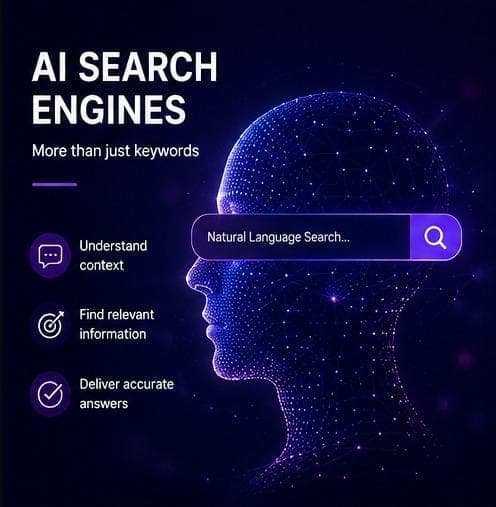
Many websites fail to appear in AI-generated search results because they continue using outdated SEO practices. While traditional optimization still matters, AI search engines evaluate content through a broader lens, emphasizing usefulness, credibility, and context. Avoiding the following mistakes can significantly improve your visibility.
Repeating the same keyword unnaturally is no longer effective. AI search engines understand language patterns and semantic relationships, making keyword stuffing an outdated tactic that can hurt readability.
Keyword Stuffing
Instead, use your primary keyword naturally while incorporating related terms and synonyms throughout the article.
Example:
Instead of repeating:
“Optimize for AI search engines” 20 times,
Use related phrases such as:
- AI SEO
- Generative search optimization
- AI-powered search
- Semantic SEO
- Conversational search optimization
- AI content optimization
This creates richer, more natural content.
Publishing Thin Content
AI search engines favor comprehensive resources over short articles that provide little value.
Avoid writing articles with only a few hundred words that barely cover the topic. Instead, create in-depth guides that answer multiple related questions and provide actionable advice.
High-quality content typically includes:
- Definitions
- Step-by-step instructions
- Examples
- Statistics
- Case studies
- Expert opinions
- FAQs
- Practical tips
The more complete your resource, the more valuable it becomes to both users and AI systems.
Ignoring User Experience
Even exceptional content can struggle to rank if the user experience is poor.
Improve your website by ensuring:
- Fast loading speeds
- Mobile-friendly design
- Easy navigation
- Readable typography
- Minimal intrusive ads
- Clear calls to action
A positive user experience encourages longer visits and stronger engagement signals.
Failing to Update Content
Search trends and AI technologies evolve rapidly. An article published a year ago may contain outdated advice that reduces its credibility.
Regularly review your content to:
- Update statistics
- Add new examples
- Replace outdated screenshots
- Expand sections with fresh insights
- Remove obsolete recommendations
Fresh content signals relevance and increases your chances of being surfaced in AI-generated answers.
Overlooking Content Accuracy
AI search engines prioritize factual, trustworthy information. Publishing inaccurate or misleading content can damage both your rankings and your brand reputation.
Always verify:
- Statistics
- Dates
- Product information
- Industry trends
- Technical recommendations
Accurate content builds trust with readers and AI systems alike.
AI SEO Tools That Can Improve Your Optimization
The right tools can streamline your AI SEO strategy and help you create content that aligns with modern search experiences.
AI Writing Assistants
AI writing tools can assist with:
- Brainstorming ideas
- Creating outlines
- Improving readability
- Expanding content
- Generating FAQs
Use them as assistants rather than replacements for human expertise. Always review, fact-check, and personalize AI-generated drafts.
Keyword Research Tool
Modern keyword research tools now identify:
- Conversational queries
- Question-based searches
- Semantic keywords
- Long-tail opportunities
- Search intent
These insights help you create content that matches how people interact with AI-powered search.
Technical SEO Platforms
Technical SEO tools help monitor:
- Crawl errors
- Broken links
- Site speed
- Core Web Vitals
- Indexing issues
- Structured data validation
Keeping your site technically healthy ensures AI systems can efficiently crawl and understand your content.
Analytics and Performance Tracking
Track how your content performs by monitoring:
- Organic traffic
- User engagement
- Time on page
- Click-through rates
- Conversion rates
- Ranking improvements
Regular analysis helps identify which content resonates with users and where further optimization is needed.
The Future of AI Search Optimization
The future of search is becoming increasingly conversational, personalized, and multimodal. AI search engines are moving beyond matching keywords to understanding user intent, context, and preferences.
Emerging trends include:
- Voice-first search experiences
- Personalized AI-generated answers
- Visual and image-based search
- Video content analysis
- Real-time information synthesis
- Deeper understanding of user intent
- Greater emphasis on first-hand experience and original research
Businesses that consistently produce authentic, authoritative, and user-focused content will be better positioned to thrive as these technologies evolve.
Final Thoughts
Optimizing for AI search engines is no longer an optional strategy—it is becoming a fundamental part of modern SEO. Success depends on creating content that is genuinely helpful, technically sound, and backed by expertise. Focus on answering users’ questions thoroughly, building topical authority, maintaining a fast and accessible website, and continuously updating your content with accurate information.
As AI continues to reshape the way people search, the websites that prioritize quality, trust, and exceptional user experiences will earn greater visibility, stronger brand authority, and sustainable organic growth. By embracing AI SEO today, you position your website to succeed in the next generation of search.
How to Optimize for AI Search Engines
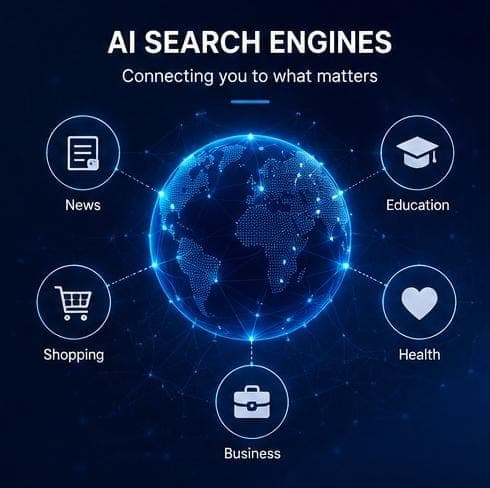
Artificial intelligence is transforming how people discover information online. Instead of relying only on traditional search results, AI-powered search engines now generate direct answers by analyzing trustworthy, well-structured content. To stay visible in 2026 and beyond, businesses and content creators must optimize not only for Google but also for AI-driven platforms such as AI assistants and generative search experiences.
Here are the most effective strategies to optimize your website for AI search engines.
1. Create Helpful, Human-First Content
AI search engines prioritize content that genuinely solves users’ problems. Instead of writing solely for keywords, focus on answering real questions with accurate, practical information.
Your content should:
- Solve specific user problems
- Include actionable advice
- Be easy to understand
- Provide unique insights and examples
- Stay updated with the latest information
Helpful content is more likely to be cited by AI systems when generating responses.
2. Demonstrate Experience, Expertise, Authority, and Trust (E-E-A-T)
AI models evaluate signals of credibility. Strengthen your authority by:
- Publishing author biographies
- Citing reliable sources
- Sharing original research
- Including real-life case studies
- Keeping information current
Trustworthy websites have a better chance of being referenced in AI-generated answers.
3. Answer Questions Naturally
People increasingly use conversational searches such as:
- What is AI SEO?
- How do AI search engines rank content?
- What is the best way to optimize for AI search?
Write in a natural, conversational style and provide clear answers immediately after each question.
4. Organize Content with Clear Headings
AI systems understand well-structured pages more effectively.
Use:
- One H1 title
- Descriptive H2 and H3 headings
- Bullet points
- Numbered lists
- Short paragraphs
- Summary sections
A logical structure makes content easier for both AI and human readers.
5. Focus on Search Intent
Rather than targeting only keywords, understand why users are searching.
Create content that satisfies:
- Informational intent
- Commercial intent
- Transactional intent
- Navigational intent
When your page fully answers the user’s intent, AI search engines are more likely to recommend it.
6. Build Topic Clusters
Instead of publishing isolated articles, create comprehensive content hubs.
Example:
Main Topic: AI SEO Guide
Supporting articles:
- AI Keyword Research
- AI Content Optimization
- AI Search Ranking Factors
- AI Search Engine Tools
- AI SEO Best Practices
Link these articles together with internal links to strengthen topical authority.
7. Optimize for Featured Snippets and AI Summaries
AI systems often extract concise answers from web pages.
Increase your chances by:
- Providing definitions in 40–60 words
- Using FAQ sections
- Creating comparison tables
- Including step-by-step instructions
- Writing concise summaries after major sections
8. Use Structured Data
Schema markup helps AI understand your content.
Useful schema types include:
- Article
- FAQ
- HowTo
- Product
- Review
- Organization
- Person
- Breadcrumb
Structured data improves content interpretation and discoverability.
9. Improve Technical SEO
Even AI search engines depend on technically sound websites.
Optimize:
- Core Web Vitals
- Mobile responsiveness
- HTTPS security
- Fast page speed
- XML sitemaps
- Clean URLs
- Crawlability
- Internal linking
Technical excellence ensures AI systems can efficiently access and interpret your content.
10. Optimize for Semantic Search
AI understands context rather than exact keyword matches.
Instead of repeating one keyword, naturally include related terms, synonyms, and concepts.
For example, an article about AI Search Optimization might also mention:
- Generative search
- AI-powered search
- Conversational search
- Search intent
- Natural language processing
- Large language models
- Semantic SEO
This provides richer context for AI systems.
11. Keep Content Fresh
AI favors current, accurate information.
Regularly:
- Update statistics
- Refresh screenshots
- Add new examples
- Improve outdated sections
- Remove obsolete advice
Fresh content signals relevance and reliability.
12. Strengthen Your Brand Authority
Strong brands are referenced more frequently by AI systems.
Build authority by:
- Publishing consistently
- Earning quality backlinks
- Being active on professional platforms
- Creating original research
- Encouraging positive mentions across the web
Brand recognition increases your visibility in AI-generated responses.
13. Include Original Data and Insights
AI search engines value unique information that cannot be found elsewhere.
Consider publishing:
- Surveys
- Industry reports
- Case studies
- Expert interviews
- Performance benchmarks
- Original graphics and charts
Exclusive content makes your website a more valuable source.
14. Optimize Images and Multimedia
AI can interpret multimedia content more effectively when it is properly optimized.
Best practices include:
- Descriptive file names
- Meaningful alt text
- High-quality images
- Informative captions
- Optimized image sizes
- Videos with transcripts
Rich media improves both user experience and AI comprehension.
15. Add Comprehensive FAQ Sections
FAQs address long-tail queries and conversational searches that AI systems frequently answer.
Examples:
- What is AI SEO?
- How do AI search engines work?
- Is traditional SEO still important?
- Can AI-generated content rank?
- What are the best AI SEO tools?
Each answer should be concise, accurate, and easy to scan.
Best Practices Checklist
- ✔ Write for people first, then optimize for AI.
- ✔ Demonstrate E-E-A-T throughout your content.
- ✔ Cover topics comprehensively.
- ✔ Structure content with clear headings and lists.
- ✔ Optimize for conversational search.
- ✔ Use schema markup where appropriate.
- ✔ Improve technical SEO and page speed.
- ✔ Build topical authority through content clusters.
- ✔ Keep information fresh and accurate.
- ✔ Publish original insights and research.
- ✔ Strengthen your brand reputation online.
Conclusion
Optimizing for AI search engines is no longer just about keywords—it is about creating trustworthy, comprehensive, and user-focused content that AI systems can confidently understand and reference. By combining strong technical SEO, topical authority, semantic optimization, structured data, and valuable original insights, you can increase your visibility in both traditional search results and AI-generated answers. As AI continues to reshape search in 2026 and beyond, websites that prioritize quality, credibility, and user experience will be best positioned for long-term success.
Common Mistakes to Avoid When Optimizing for AI Search Engines
Many websites fail to appear in AI-generated search results because they continue using outdated SEO practices. While traditional optimization still matters, AI search engines evaluate content through a broader lens, emphasizing usefulness, credibility, and context. Avoiding the following mistakes can significantly improve your visibility.
Keyword Stuffing
Repeating the same keyword unnaturally is no longer effective. AI search engines understand language patterns and semantic relationships, making keyword stuffing an outdated tactic that can hurt readability.
Instead, use your primary keyword naturally while incorporating related terms and synonyms throughout the article.
Example:
Instead of repeating:
“Optimize for AI search engines” 20 times,
Use related phrases such as:
- AI SEO
- Generative search optimization
- AI-powered search
- Semantic SEO
- Conversational search optimization
- AI content optimization
This creates richer, more natural content.
Overlooking Content Accuracy
AI search engines prioritize factual, trustworthy information. Publishing inaccurate or misleading content can damage both your rankings and your brand reputation.
Always verify:
- Statistics
- Dates
- Product information
- Industry trends
- Technical recommendations
Accurate content builds trust with readers and AI systems alike.
AI SEO Tools That Can Improve Your Optimization
The right tools can streamline your AI SEO strategy and help you create content that aligns with modern search experiences.
AI Writing Assistants
AI writing tools can assist with:
- Brainstorming ideas
- Creating outlines
- Improving readability
- Expanding content
- Generating FAQs
Use them as assistants rather than replacements for human expertise. Always review, fact-check, and personalize AI-generated drafts.
Keyword Research Tools
Modern keyword research tools now identify:
- Conversational queries
- Question-based searches
- Semantic keywords
- Long-tail opportunities
- Search intent
These insights help you create content that matches how people interact with AI-powered search.
Technical SEO Platforms
Technical SEO tools help monitor:
- Crawl errors
- Broken links
- Site speed
- Core Web Vitals
- Indexing issues
- Structured data validation
Keeping your site technically healthy ensures AI systems can efficiently crawl and understand your content.
Analytics and Performance Tracking
Track how your content performs by monitoring:
- Organic traffic
- User engagement
- Time on page
- Click-through rates
- Conversion rates
- Ranking improvements
Regular analysis helps identify which content resonates with users and where further optimization is needed.
The Future of AI Search Optimization
The future of search is becoming increasingly conversational, personalized, and multimodal. AI search engines are moving beyond matching keywords to understanding user intent, context, and preferences.
Emerging trends include:
- Voice-first search experiences
- Personalized AI-generated answers
- Visual and image-based search
- Video content analysis
- Real-time information synthesis
- Deeper understanding of user intent
- Greater emphasis on first-hand experience and original research
Businesses that consistently produce authentic, authoritative, and user-focused content will be better positioned to thrive as these technologies evolve.
Final Thoughts
Optimizing for AI search engines is no longer an optional strategy—it is becoming a fundamental part of modern SEO. Success depends on creating content that is genuinely helpful, technically sound, and backed by expertise. Focus on answering users’ questions thoroughly, building topical authority, maintaining a fast and accessible website, and continuously updating your content with accurate information.
As AI continues to reshape the way people search, the websites that prioritize quality, trust, and exceptional user experiences will earn greater visibility, stronger brand authority, and sustainable organic growth. By embracing AI SEO today, you position your website to succeed in the next generation of search.